Why Low Temperature Edge Banding Adhesives Are Becoming More Important in South America
In South America, furniture manufacturers are under increasing pressure to reduce production costs while maintaining stable product quality.
Many panel furniture factories in countries such as Brazil, Chile, Colombia, Peru, and Argentina are facing common edge banding problems:
High electricity consumption from traditional hot melt adhesives
Edge delamination in hot and humid climates
Glue line discoloration on light-colored panels
Poor machinability on manual edge banding machines
Unstable bonding on MDF and particleboard
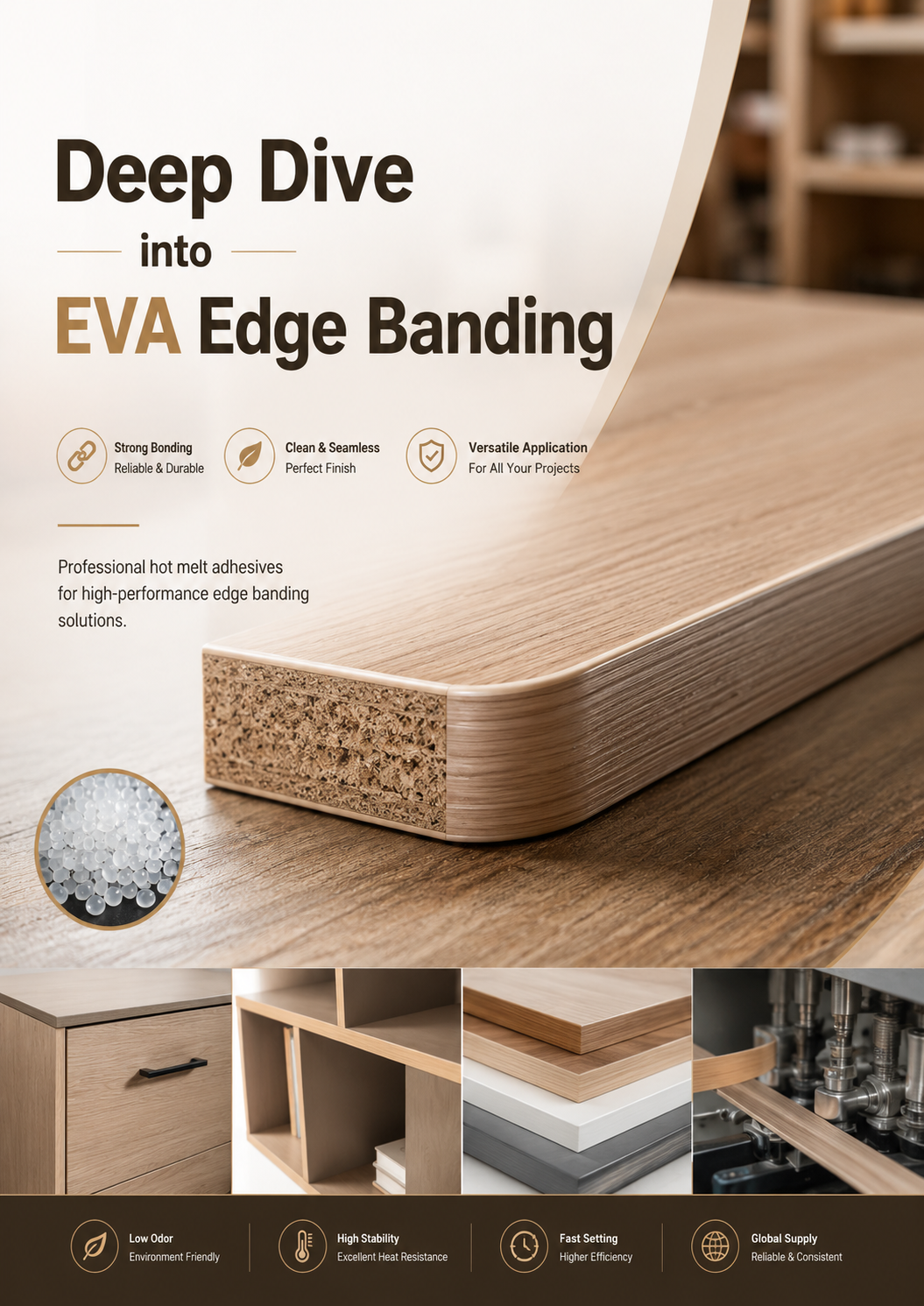
As production costs continue to rise, low-temperature EVA hot melt adhesives are becoming a preferred solution for furniture manufacturers looking for better efficiency and stable bonding performance.
Conclusion:
A stable low-temperature EVA edge banding adhesive can significantly improve production efficiency, reduce energy costs, and deliver cleaner edge finishing results.
Common Edge Banding Problems in South American Furniture Factories
1. High Energy Consumption
Traditional EVA adhesives often require operating temperatures above 180℃.
This increases:
Power consumption
Machine heating time
Production costs
For factories operating multiple edge banding machines, energy costs can become a major expense.
2. Edge Peeling in Hot and Humid Environments
South American climates are often humid and warm. Poor-quality adhesives may soften easily and lead to:
Edge lifting
Weak bonding
Customer complaints
This problem is especially common in kitchen cabinets, wardrobes, and office furniture.
3. Poor Performance on Manual Machines
Many small and medium-sized furniture factories still use manual or semi-automatic edge banding machines.
Ordinary adhesives may cause:
Uneven glue spreading
Carbonization
Glue stringing
Difficult machine cleaning
4. Visible Glue Lines on White Panels
Modern furniture trends in South America increasingly favor:
White MDF
Light wood grain finishes
Minimalist furniture styles
Low-quality adhesives may yellow over time or create obvious glue lines that reduce furniture appearance quality.
Solution: Why Low Temperature EVA Edge Banding Adhesive Performs Better
A high-quality low-temperature EVA hot melt adhesive solves these production challenges efficiently.
Lower Operating Temperature Reduces Energy Costs
The recommended operating temperature is only 130–150℃, which is significantly lower than traditional edge banding adhesives.
Benefits include:
Reduced electricity consumption
Faster machine startup
Lower risk of adhesive carbonization
Longer machine service life
Strong Adhesion on MDF and Particleboard
The adhesive provides excellent bonding performance on:
MDF boards
Particleboard
Hardwood panels
It is compatible with:
PVC edge bands
Veneer edge strips
Decorative paper edge strips
This helps manufacturers improve furniture durability and reduce edge failure rates.
Excellent Machinability for Manual and Automatic Machines
The adhesive offers:
Smooth flowability
Stable application
Clean cutting performance
Reduced glue stringing
This is especially important for factories using:
Manual edge banders
Straight edge banding machines
Contour edge banding equipment
Stable Color for Modern Furniture Production
Natural white granules provide better color stability and cleaner glue lines, making the adhesive suitable for:
White furniture panels
Glossy furniture surfaces
Premium cabinetry
Conclusion:
Low-temperature EVA edge banding adhesive is an efficient and cost-effective solution for South American furniture manufacturers seeking cleaner appearance, lower energy consumption, and stable bonding quality.
Recommended EVA Edge Banding Adhesive for Furniture Factories
For manufacturers looking for reliable low-temperature performance, EG-3313 EVA hot melt adhesive is a highly practical option.
Key advantages include:
Excellent adhesion strength
High bond yield
Good machinability
Stable color performance
Low process temperature starting from 130℃
It is especially suitable for:
Manual edge banding machines
Straight edge banding
Contour edge banding applications
Technical Specifications
Parameter
Specification
Product Type
EVA Hot Melt Adhesive
Appearance
Natural White Granules
Solid Content
100%
Viscosity (160℃)
20,000–30,000 mPa·s
Softening Point
85–90℃
Operating Temperature
130–150℃
Packaging
25 kg/bag
Shelf Life
24 months
Application Scenarios
This adhesive is widely used in:
Kitchen cabinet production
Wardrobe manufacturing
Office furniture
MDF furniture
Panel furniture factories
Decorative furniture production
It performs well on:
PVC edge strips
Veneer edge bands
Decorative paper edge materials
How to Choose the Right EVA Edge Banding Adhesive
Choose Based on Machine Type
Manual machines require adhesives with:
Better flowability
Lower operating temperatures
Cleaner machining performance
Consider Climate Conditions
For hot and humid South American environments, adhesives should have:
Stable softening points
Strong bonding performance
Good heat resistance
Consider Furniture Appearance Requirements
For premium furniture production:
White or clear glue lines are preferred
Stable color performance is essential
FAQ
1. Why use low-temperature EVA adhesive instead of traditional high-temperature adhesive?
Low-temperature adhesives reduce energy consumption, machine carbonization, and production costs while maintaining stable bonding strength.
2. Is this adhesive suitable for MDF furniture?
Yes. It is specially designed for MDF, particleboard, hardwood panels, and decorative furniture production.
3. Can it be used on manual edge banding machines?
Yes. It is an ideal option for manual and semi-automatic edge banding equipment.
4. What edge banding materials are compatible?
The adhesive works with PVC, veneer, decorative paper edge strips, and similar materials.
5. What is the recommended operating temperature?
The suggested operating temperature is between 130℃ and 150℃.
Final Thoughts
Furniture manufacturers in South America need edge banding adhesives that can balance production efficiency, energy savings, and bonding reliability.
Low-temperature EVA hot melt adhesives are becoming a smart solution because they:
Reduce operating costs
Improve furniture appearance
Support stable production
Work well in hot and humid environments
For factories seeking efficient and stable edge banding performance, EG-3313 is a reliable option worth considering.
REACH 규정 준수 동향으로 인해 건축 자재 조립용 APAO 핫멜트 접착제에 대한 관심이 높아지고 있습니다.
친환경 건축 이니셔티브와 지속 가능한 제조 관행이 유럽 전역으로 계속 확대됨에 따라 접착제 선택 기준도 진화하고 있습니다. 접착 성능은 여전히 중요하지만 제조업체에서는 접착 시스템을 선택할 때 규정 준수, 공정 호환성 및 기판 다양성을 점점 더 평가하고 있습니다.
이러한 배경에서 APAO(Amorphous Poly Alpha Olefin) 핫멜트 접착제는 건축자재 조립 분야에서 점점 주목을 받고 있습니다. 이들의 사용은 제조 효율성과 규제 요구 사항을 모두 고려해야 하는 단열재, 음향 패널, 복합 구조 및 산업용 건물 구성 요소 전반에 걸쳐 평가되고 있습니다.
접착제 선택에서 REACH 준수가 중요한 이유는 무엇입니까?
REACH(화학물질의 등록, 평가, 승인 및 제한)는 유럽 연합 내에서 화학물질을 관리하는 가장 중요한 규제 프레임워크 중 하나입니다.
유럽 시장에 제품을 공급하는 제조업체의 경우 규정 준수 고려 사항에는 다음이 포함됩니다.
원자재 규정 준수
화학물질 관리
공급망 추적성
기술 문서 지원
산업 건설 및 조립식 건물 프로젝트에서 공급업체는 조달 프로세스 전반에 걸쳐 지원 기술 및 규정 준수 문서를 제공해야 하는 경우가 많습니다.
결과적으로 완전한 기술 정보와 규정 준수 문서가 지원되는 접착제 제품은 유럽 시장에 서비스를 제공하는 제조업체에서 점점 더 선호되고 있습니다.
건축 자재 조립품은 접착제에 어떤 요구 사항을 적용합니까?
현대 건축 구성 요소는 점점 더 가볍고 복잡해지고 있으며 복합 재료 구조에 점점 더 의존하고 있습니다.
일반적인 조립 응용 분야는 다음과 같습니다.
바닥 방음 폴리에스터 폼보드
PUR 폼 접착
발포폴리스티렌(EPS) 조립
폼-금속 접착
플라스틱 및 복합재료 조립
기술 문서에 따르면 APAO 핫멜트 접착제는 이러한 조립 및 접착 응용 분야에 사용될 수 있습니다.
여러 제품 라인을 운영하는 제조업체의 경우 기판 호환성이 넓어져 생산 계획 및 접착제 관리가 단순화될 수 있습니다.
어떤 기술 매개변수를 평가해야 합니까?
접착제 선택은 마케팅 주장에만 의존하기보다는 측정 가능한 가공 매개변수를 기반으로 해야 합니다.
기술 데이터 시트에 따르면EG-730 APAO 핫멜트 접착제:
매개변수
값
오픈시간
55~70초
경화시간
25~45초
연화점
100±5°C
160°C에서의 점도
4000±500mPa·s
180°C에서의 점도
2200±300mPa·s
권장 적용 온도
160~190°C
출처: EG-730 기술 데이터 시트, 1페이지.
오픈시간
단열 패널 및 대형 복합재 조립품의 경우 개방 시간은 생산 중 사용 가능한 위치 지정 창을 정의합니다.
EG-730은 55~70초의 오픈 시간을 제공하며 이는 공정 평가 참고 자료로 사용할 수 있습니다.
가공 점도
점도는 스프레이 도포 성능과 코팅 균일성에 영향을 미칩니다.
EG-730은 160°C에서 약 4000±500mPa·s, 180°C에서 2200±300mPa·s의 점도를 가지며 장비 설정 및 공정 검증에 유용한 참조 값을 제공합니다.
작동 온도 범위
권장되는 적용 온도 범위는 160~190°C이며 산업 제조 작업에 대해 정의된 프로세스 창을 제공합니다.
APAO 기술이 주목받는 이유는 무엇일까?
건축 자재 제조업체는 효율적인 처리와 여러 기판과의 호환성을 지원하는 접착 시스템을 점점 더 찾고 있습니다.
제품 문서에 따르면 APAO 핫멜트 접착제의 특징은 다음과 같습니다.
냄새가 적음
긴 오픈 시간
좋은 열 안정성
다중 기판 결합 기능
중요한 것은 가공 안정성과 관련된 평가가 측정 가능한 매개변수에 의해 뒷받침되어야 한다는 것입니다. EG-730의 경우 다음이 포함됩니다.
연화점 100±5°C
적용 온도 범위 160~190°C
160°C와 180°C 모두에서 정의된 점도 값
이러한 사양은 프로세스 검증 및 장비 구성에 대한 객관적인 참조를 제공합니다.
결론
REACH 준수가 유럽의 건축 자재 부문 전반에 걸쳐 조달 결정에 계속 영향을 미치면서 제조업체는 규제 호환성, 프로세스 적응성 및 다중 기판 결합 기능에 더 큰 중점을 두고 있습니다.
폼 재료, 금속 기판 및 복합 어셈블리와 관련된 응용 분야의 경우 접착제 선택 시 접착 성능 외에도 개방 시간, 가공 온도, 점도 및 실제 생산 요구 사항을 고려해야 합니다.
공개된 기술 사양을 기반으로 하는 EG-730 APAO 핫멜트 접착제는 오픈 시간 55~70초, 연화점 100±5°C, 적용 온도 범위 160~190°C를 제공하여 건축 자재 조립 애플리케이션에서 제품 평가 및 프로세스 개발을 위한 측정 가능한 기준점을 제공합니다.
유럽의 산업 건축 프로젝트가 조립 중 채권 실패를 해결하는 방법
조립식 건축 및 산업용 건물에 대한 유럽 시장이 계속 성장함에 따라 더 많은 제조업체가 공장 기반 생산 및 현장 조립 모델을 채택하고 있습니다. 이러한 환경에서 접착 기술은 제조 효율성과 조립 품질 모두에서 점점 더 중요한 역할을 하고 있습니다.
프리캐스트 건물 구성 요소, 단열 패널 및 복합 재료와 관련된 응용 분야의 경우 결합 실패로 인해 재작업, 생산 중단 및 추가적인 품질 관리 문제가 발생할 수 있습니다. 결과적으로 올바른 핫멜트 접착제 시스템을 선택하는 것이 유럽 전역의 건축 자재 제조업체에게 중요한 고려 사항이 되었습니다.
대형 부품 조립에서 결합 실패가 발생하는 이유는 무엇입니까?
산업 건설 프로젝트에는 폴리에스테르 폼 보드, PUR 폼, 발포 폴리스티렌(EPS), 금속 기판 및 다양한 복합 재료를 접착하는 작업이 포함되는 경우가 많습니다. 이러한 기판은 표면 특성과 접착 요구 사항이 다릅니다.
일반적으로 여러 가지 요인이 결합 문제에 영향을 미칩니다.
오픈 시간이 부족함
대형 부품은 조립이 완료되기 전에 위치 지정, 정렬 및 압착이 필요한 경우가 많습니다. 접착제 개방 시간이 너무 짧으면 적절한 배치가 이루어지기 전에 접착 성능에 영향을 미칠 수 있습니다.
제한된 다중 기판 호환성
산업용 건물 응용 분야에서는 폼 재료를 금속, 플라스틱 또는 복합 기판에 접착해야 하는 경우가 많습니다. 표면 에너지의 차이는 습윤 및 접착 성능에 영향을 미칠 수 있습니다.
좁은 처리 창
자동화된 제조 환경에서 접착제는 실제 온도 범위 내에서 가공 가능한 상태를 유지해야 합니다. 운영 범위가 좁으면 생산이 더 복잡해질 수 있습니다.
핫멜트 접착제를 선택할 때 가장 중요한 매개변수는 무엇입니까?
산업 조립 분야의 경우 접착제 선택은 일반적으로 개방 시간, 경화 속도, 점도 및 열 안정성을 기준으로 합니다.
예를 들어 EG-730 APAO 핫멜트 접착제를 사용하십시오(특정 매개변수는 아래와 같습니다).
매개변수
값
오픈시간
55~70초
경화시간
25~45초
연화점
100±5°C
160°C에서의 점도
4000±500mPa·s
180°C에서의 점도
2200±300mPa·s
권장 적용 온도
160~190°C
출처: EG-730 기술 데이터 시트, 1페이지.
55~70초의 개방 시간은 대형 어셈블리에 추가적인 위치 지정 유연성을 제공하고, 25~45초의 경화 시간은 지속적인 생산 공정을 지원하는 데 도움이 됩니다.
가공 관점에서 볼 때 160°C에서 약 4000mPa·s의 점도는 일반적인 스프레이 도포 시스템에 적합하며 일관된 접착제 도포를 지원할 수 있습니다.
APAO 핫멜트 접착제의 적용 특성
APAO 기반 핫멜트 접착제는 일반적으로 다음 용도로 사용할 수 있습니다.
바닥 방음 폴리에스터 폼보드
PUR 폼 접착
폴리스티렌 폼 접착
플라스틱 접착
금속 접합
복합재료 조립
제조업체의 경우 다양한 기판 유형과의 호환성을 통해 다양한 생산 라인에서 접착제 관리를 단순화하는 데 도움이 될 수 있습니다.
따라서 EG-730 APAO 핫멜트 접착제의 연화점은 100±5°C이고 권장 작동 온도 범위는 160~190°C로 산업 생산 환경에 유용한 처리 기준을 제공합니다.
유럽 제조업체는 무엇을 찾고 있습니까?
유럽의 접착제 선택 기준은 접착 강도 이상으로 확대되었습니다. 제조업체에서는 점점 더 환경 규정 준수, 생산 효율성 및 프로세스 호환성을 평가하고 있습니다.
주요 고려 사항은 다음과 같습니다.
규제 요구 사항
REACH 준수
환경 요구 사항
냄새가 적은 생산 환경
생산 호환성
스프레이 시스템에 대한 적합성
지속적인 생산 능력
적절한 오픈 시간
기판 호환성
폼 소재
궤조
플라스틱
복합재료
산업용 건물 응용 분야의 경우 접착제 선택은 항상 실제 작동 조건에서 생산 시험을 통해 검증되어야 합니다.
결론
유럽의 산업 건설 및 조립식 건물 부문이 계속 발전함에 따라 접착 신뢰성은 제조 성능에 있어 여전히 중요한 요소로 남아 있습니다.
공개된 기술 사양에 따르면 EG-730 APAO 핫멜트 접착제는 개방 시간 55~70초, 경화 시간 25~45초, 연화점 100±5°C, 작동 온도 범위 160~190°C를 제공합니다.
이러한 특성은 단열재, 복합 구조 및 산업용 건물 조립과 관련된 제조업체에 유용한 기준점을 제공합니다. 최종 접착제 선택은 항상 기판 테스트, 생산 요구 사항 및 실제 작동 조건을 기반으로 해야 합니다.